
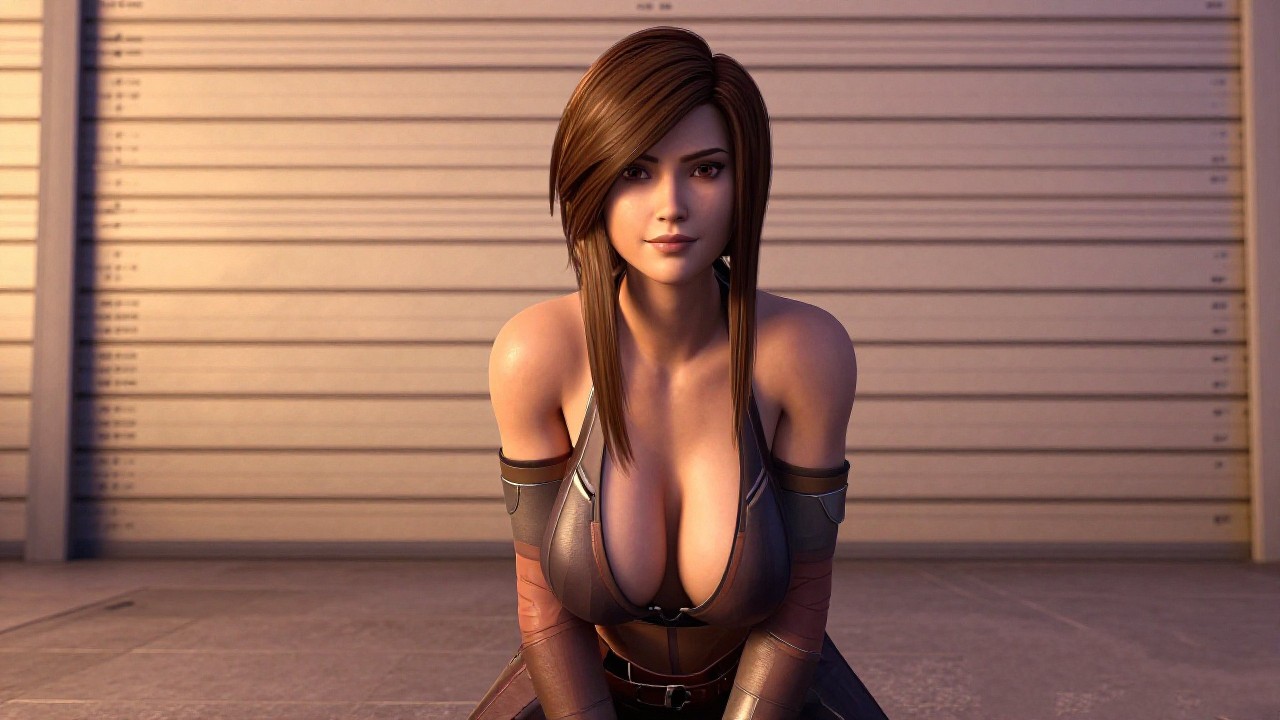
Calling a program an adult content creator hides how much of the work happens before and after the picture is drawn. A request passes through a text encoder, an image model, a safety filter, and often a language model that keeps a character consistent, and each stage shapes what the user finally sees. Looking at those stages one at a time explains why results look polished in some respects and oddly generic in others.
Turning Words Into Numbers
An image model cannot read. A separate text encoder converts the prompt into a list of numbers that captures its meaning, so that “candlelit bedroom” and “bedroom lit by candles” end up close together. The image model then treats those numbers as its brief at every step of drawing. Short prompts leave gaps that the model fills with its most common patterns, which is why many first results look alike.
A service built as an ai porn generator such as Lovescape usually adds a layer before that point. The character’s stored profile, which covers appearance, outfit habits, and mood, is merged with the user’s latest request, so a short message like “show me the beach” reaches the encoder as a full description of a specific person.
Encoders have limits. The text encoder described in the original CLIP design reads at most 76 tokens plus start and end markers, so tools either cut long prompts or split them into chunks, and details placed at the end of a long request can be lost.
Where The Training Data Comes From
Every image model inherits the habits of its training data. When OpenAI researchers introduced CLIP, the paper described a dataset of 400 million image and text pairs collected from the internet, and collections of that order are now normal for models that draw from text.
The same paper is frank about the downside. It notes that the pairs were unfiltered and uncurated and that models trained on them learn many social biases. In adult imagery, this tends to show up as narrow beauty standards, repeated faces and body types that drift toward a few popular looks unless the user specifies otherwise.
Adult services usually fine-tune a general model on a smaller, curated set to settle on a style. Where those images came from, and whether the people and artists in them agreed, remains disputed in courts and legislatures in several countries, and providers differ widely in how much they disclose about it. Curated fine-tuning sets are typically a tiny fraction of the size of the original collection, so the style they teach is narrow and instantly recognizable.
Some developers now publish how they filtered their data, or let artists and rights holders opt out of future training runs. Opt-outs and data filters vary in scope and cannot undo what an earlier model already learned, so they change future releases more than the models in use today. A reader judging a service can look for a plain statement about training sources, and treat silence on the subject as information as well.
Filters On Both Ends
Reputable services check the request before generation and the result after it. The first filter looks for banned subjects in the text, and the second runs a classifier over the finished image and discards anything that breaks the rules, including any result that appears to show a minor or a real, identifiable person. Apparent age is checked separately from the prompt, because a model can draw a youthful-looking subject from an innocent request, so classifiers estimate age on the output and reject borderline cases.
Filters make mistakes in both directions. A harmless request can be refused because it contains a flagged word, and an edge case can slip through until a user reports it. Providers tune the thresholds continuously, which is why the same prompt can behave differently from one month to the next.
Users see the effect as refusals, blurred previews, or a character stepping out of role. Rewording the request in plain language usually resolves a false alarm, while repeated attempts to evade the rules can lead to a suspended account.
What It Costs To Run
Generation runs on graphics processors that providers rent or own, and every image occupies one for a few seconds. Multiplied across thousands of users, that cost explains why chat is often free while pictures sit behind a subscription, since a text reply needs a small fraction of the computing that a single image does.
Resolution and clip length act as the other price levers. A larger image costs more than a small one, an upscaling pass adds a second step, and a video clip requires many frames, so providers ration them by plan. Seeing which limits a service imposes tells you where its costs sit.
Free tiers show the arithmetic. A provider that offers unlimited text but a handful of images per day is deciding how many seconds of graphics-processor time each non-paying user may consume, and that number is a business decision rather than a technical limit. Queue priority is another lever, since paying users often move ahead when servers are busy, so a long wait on a free account is part of the design.
Reading The Results With A Critical Eye
Even strong output carries tells. Fingers, jewelry, text on clothing, and background objects are common failure points, and a character’s face can shift subtly between images when the service does not store reference data. Treating each picture as a draft rather than a record keeps expectations realistic.
Images made on a platform usually stay on its servers, so the retention policy and the deletion options deserve a look before anything personal enters a chat. The material is fiction, and the sensible rule that follows is that no real person’s name, photo, or likeness belongs in a request.
Provenance is also changing. In the EU, transparency rules under the AI Act that took effect on 2 August 2026 require providers of generative systems to mark synthetic output in a machine-readable way where that is technically feasible, so invisible watermarks and metadata are becoming common. Saving the prompt and seed next to a favorite image makes it reproducible later and keeps a record of how it was made.